

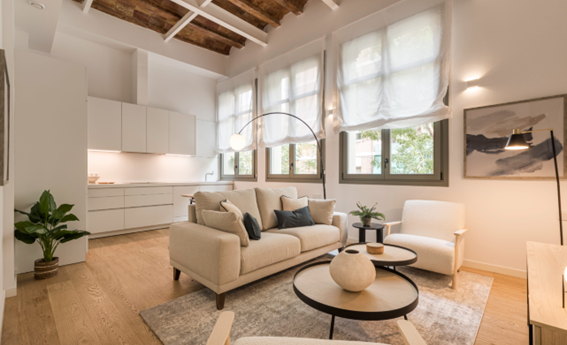
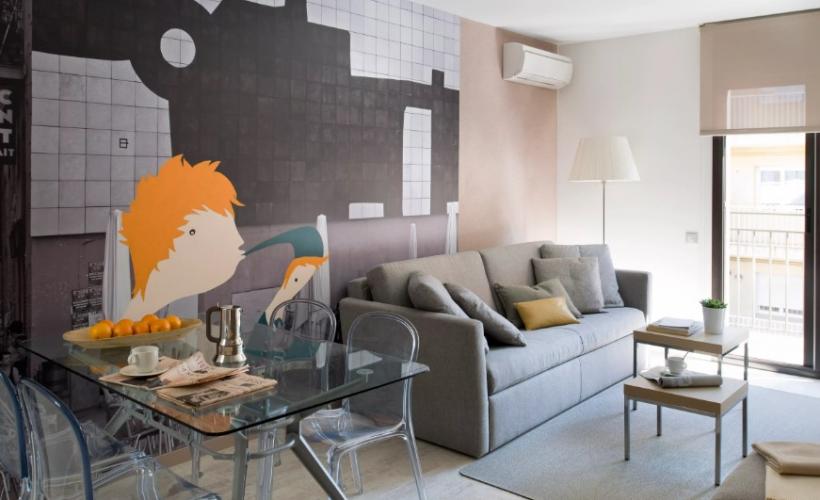
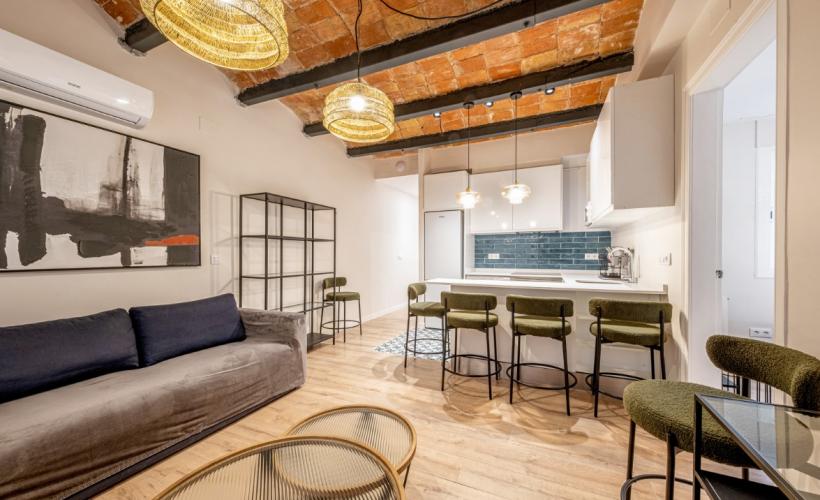
Between the 22@ technology district, Fira de Gran Via and the port, many companies look for corporate apartments for companies in Barcelona for projects lasting several months, rollouts and team relocations.
Demand does not come from a single profile. In El Poblenou and Sant Martí, technology offices and headquarters linked to the 22@ digital ecosystem are concentrated, while logistics operations look to the Port of Barcelona and Zona Franca.
There are also stays associated with healthcare and technical support. For professionals rotating through Hospital Clínic or Hospital de Sant Pau, having accommodation well connected by metro reduces daily travel and simplifies team organisation.
With more than 1.6 million inhabitants, Barcelona combines intense business activity and manageable urban journeys: from Sants or Plaça Espanya, it is possible to reach Fira Gran Via in about 15–20 minutes by car or public transport, depending on the time of day.
Day Apartment works within this context with medium- and long-term stays designed for companies: fully equipped homes, real flexibility and a practical alternative to a hotel for relocation, construction, consulting or corporate training.
Well-connected neighbourhoods and corporate apartments for companies in Barcelona
For teams that need to move between offices, hospitals and transport hubs, Eixample, Sagrada Familia, Gràcia and Les Corts are a good fit because of their metro network and everyday services. From these areas, getting to Hospital Clínic or Sant Pau usually takes between 15 and 30 minutes by public transport.
If the project is concentrated in the technology axis, El Poblenou, Bogatell/Ciutadella, Puerto Olímpico and Sant Martí make it possible to stay close to 22@. In El Poblenou, offices, supermarkets, gyms and stations such as Llacuna or Poblenou coexist; towards Glòries or Diagonal Mar, the journey is usually 10–20 minutes.
For profiles that prioritise operational centrality, Ciutat Vella, Barrio Gótico, El Born, Raval, La Rambla and La Barceloneta provide quick connections with several metro and bus lines. They are useful locations when the employee splits their schedule between client visits, a temporary office and meetings at different points across the city.
In the southern and western stretch, Poble Sec, Montjuïc, Plaça Espanya, Sants and Sarrià-Sant Gervasi work well for those who work near Fira Barcelona or travel to Zona Franca. From Plaça Espanya to Fira Gran Via, it is about 10–15 minutes by car and around 20 by public transport.
When a more residential setting is sought, La Sagrera, Sant Andreu and Horta-Guinardó help balance rest and mobility. The future rail hub at La Sagrera reinforces its appeal, and from Sant Andreu it is possible to connect with the industrial areas of Besòs without crossing the entire city centre.
Who this temporary accommodation in Barcelona is for
This format fits HR departments, mobility consultancies and coordinators who need to place relocated workers for weeks or months without resorting to a hotel. It is usually the practical solution for onboarding, training, audits, construction works and technical rollouts.
It also works well for projects spread across several workplaces. A consultant with a schedule split between 22@, Fira and the end client does not need the same location as a healthcare professional assigned near Sant Pau or a technician linked to the Port of Barcelona. That is why the main criterion is usually actual travel time.
At Day Apartment, priority is given to medium-term stays with fully equipped accommodation and neighbourhoods that allow office work, remote work and daily life to be combined without friction.